
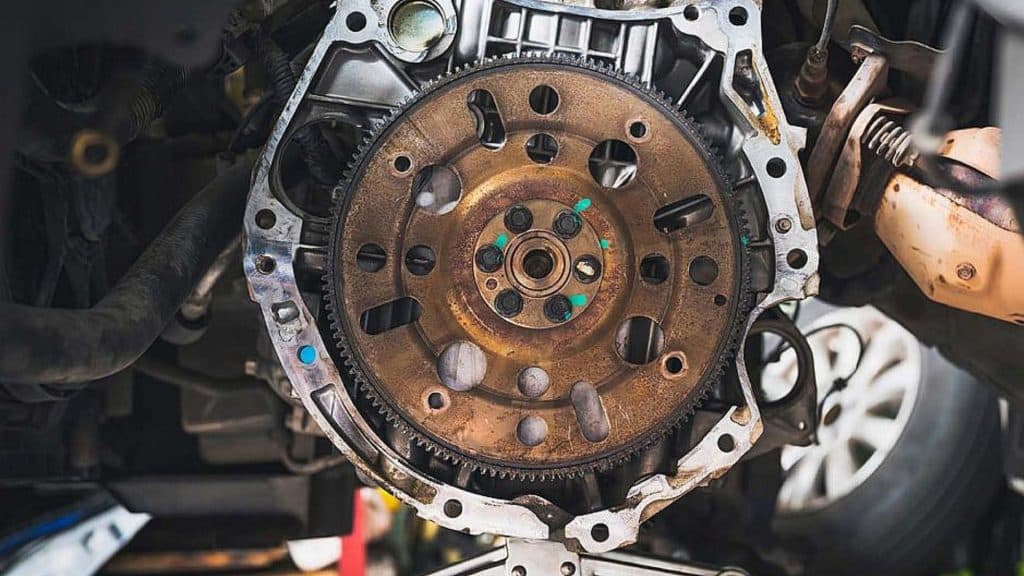
The flywheel is an important factor in ensuring the smooth running of your car engine. It is an important component in the car that drivers do not often consider until there is a problem. Problems can occur in the flywheel, which causes observable effects in the way the car starts and changes gears.
In this article, you will learn about the major signs that point to a bad flywheel so that you can prevent future expenses.
Let’s get into it!
Learn more about catalytic converters with this detailed guide.
What is a flywheel?
Flywheels are heavy, circular mechanical parts that are connected to the crankshaft of an engine. Their function is to retain the rotational motion of the engine.
It is mostly manufactured using cast-iron or steel components, although springs, bearings, and damping elements to eliminate vibrations may be used in modern cars involving dual mass flywheels.
The primary role of a flywheel revolves around engine stabilization, crafting a smooth area for the clutch to connect. It facilitates the engine to start and provides a smooth power transfer from the engine to the transmission.
Learn more about Airbag with this detailed guide.
7 Symptoms of a Bad Flywheel
These are the top 7 signs to know if you have a bad flywheel:
- Vibrations During Driving or Idling: An altered or damaged flywheel may begin to vibrate when the engine or when the clutch engages.
- Gear Shift Difficulty: A faulty flywheel may affect the mechanism of the clutch to the point where gear shifts become stiff and rough.
- Slipping Clutch: A worn flywheel may not present a smooth surface for the clutch to grasp when accelerating. This results in clutch slippage.
- Burning Odor: Too much friction between the clutch and the defective flywheel will result in heating. This consequently causes a burning smell emanating from the
transmission part. - Unusual noises: Grinding or knocking noises, particularly when the clutch pedal is pressed or released, may indicate a flywheel problem.
- Engine Starting Issues: Given that the flywheel works with the starter motor, the damages can cause some troubles in the teeth of the flywheel when the engine is in starting position.
- Clutch Pedal Feels Different: Signs of a failing flywheel include a very soft, stiff, or inconsistent clutch pedal when pressed.
Learn more about Service StabiliTrak with this detailed guide.
Watch the video below to learn more about the various signs of a bad flywheel:
Reasons for Poor Flywheel Performance?
Here are the causes of a flywheel poor performance:
- Normal Wear and Tear: Over the years, the friction created by the engagement of the clutch and the flywheel wears down the surfaces. In a car with high mileage, this can be considered normal and may lead to the loss of grip.
- Excess heat: this occurs because of repetitive use of the clutch or aggressive driving. The heat causes warping, or cracks that interfere with the smooth power flow gained by the flywheel.
- Clutch use or driver mistakes: Actions such as resting the foot on the clutch pedal and using the clutch as a car lift increase the stress on the flywheel, thereby contributing to its deterioration.
- Worn-out clutch parts: The worn component could be the clutch disc or the pressure plate, thus posing an uneven pressing force on the flywheel. This uneven pressing force causes friction and vibrations as you drive the car.
Learn more about Airbag Light with this detailed guide.
Can you drive with a bad flywheel?
Yes, you can drive with the bad flywheel, but it’s not the best thing to do. It may vibrate, slip, grind, and hesitate to move when you shift gears. Although the car will still move when you operate the clutch, the problem could worsen progressively, stressing the clutch, transmission, and even the engine.
This can eventually result in an abrupt loss of power or the failure of the entire clutch. This can leave you stranded and facing very costly repairs. It is unsafe and therefore not advisable to drive with a faulty flywheel except for a short time until the issue is repaired.
How to prevent a bad flywheel?
You can prevent a bad flywheel by avoiding riding or slipping clutches, making early oil leak repairs, practicing proper driving practices, installing good-quality clutch components, and doing regular vehicle maintenance.
Learn more about Honda Radio Code with this detailed guide.
Conclusion
A bad flywheel does not mostly totally fail without a warning, especially knowing the reason for its failure. Some possible factors that result in the malfunctioning or damage to it include normal deterioration, improper use of the clutch, overheating, or improper installation.
By driving normally, repairing the clutch as soon as you experience issues, or by preventing possible damage, you can ensure that you do not further stress the flywheel. It can also help you save the component while also running the engine smoothly.
FAQs
Is a bad flywheel fixable?
Instead of a brake lathe, some car repair shops use a block grinding machine for car repair. Commonly called a flywheel grinder, a car block grinding machine has the capacity to refurbish it, friction plates in clutches, pressure plates, and other circular components such as discs, rings, and flanges. The flywheel is ground on its surface using nature.
How long is the lifetime of a flywheel?
What is a Dual Mass Flywheel? | RAC Drive
The dual mass fly wheel must have a minimum life expectancy exceeding 100,000 miles in most cars. This may, however, vary depending on certain factors, which include driving habits, the type of components, as well as the current standard of the components that are related to the DMF.
How much does it cost to repair a flywheel?
How to conduct a visual inspection of a flywheel?
Professional Flywheel Inspection Procedure
Remove the lower bellhousing cover and soak it in brake solvent. Lightly inspect the friction surface and ring gear for discoloration, cracks, or oil residue.
How does one notice that a clutch has begun to fail?
This can occur through
Below are some warning signs that indicate a clutch failure: Your clutch is spongy, sticks, and/or vibrates when you press it down. You hear a squeaking and/or a
grumbling noise as you press down on it. You are able to rev your engine, but your acceleration may be weak.