
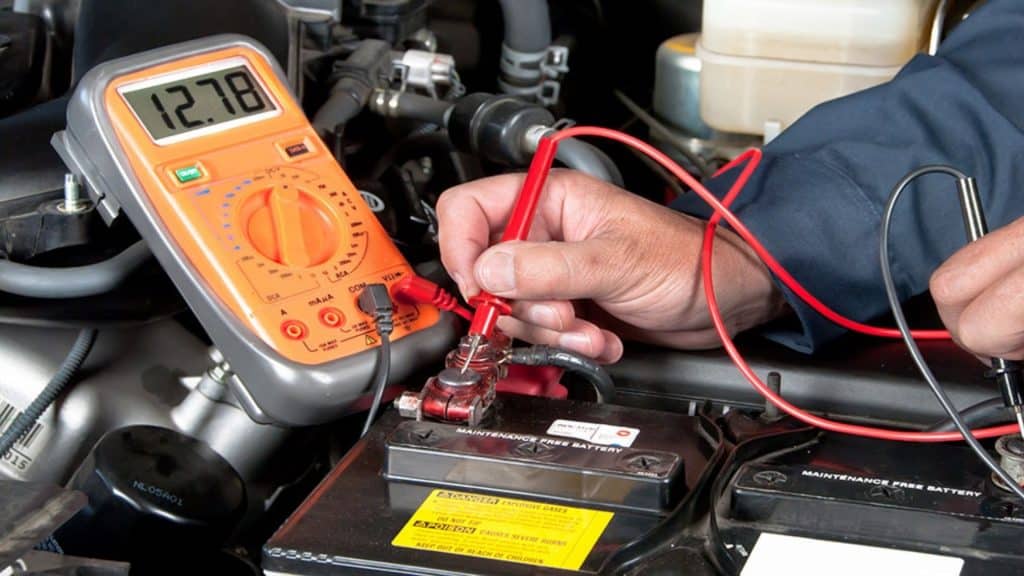
The car’s electrical system is the foundation of current new vehicles. It powers everything in the car, from engine starting to safety features and vehicle multimedia systems. Knowing how this system works helps drivers identify problems early and appreciate the technology that keeps their car running efficiently.
In this blog post, we will walk you through car electrical system basics and primary elements so that you understand how car electronics are critical to vehicles’ performance and safety.
Let’s get into it!
Learn more about 120 Dashboard Warning Light Symbols with this detailed guide.
What Is a Car Electrical System?
An electric car system refers to a set of devices that produce, store, or distribute electric power in a car. Such systems are meant to enable the normal function of all the electrical devices of a car whenever the engine is on or switched off.
Vehicle Electrics
We call the system of electric wiring and parts in a vehicle electrics. Vehicle electrics connect all car electrical components, such as computers, sensors, motors, and accessories, by transmitting current and voltage. All the electrical components take voltage from the battery and return it to the battery.
The electric power in a car, such systems enable the normal function of all the electrical devices of a car whenever the engine is on or switched off.
Battery
The battery powers vehicle electrical components even when the engine is OFF. With the help of the engine, all the electrical components in the car derive their power from the alternators. This is due to the higher current production capacity of the alternator, which is more than that of the battery. Hence, the alternator is also capable of charging the battery while supplying power to the electrical requirements of the car.
Learn more about Honda Radio Code with this detailed guide.
What are the functions of car electrical parts?
These are the functions of the car electrical part:
- Starting the car engine.
- Power supply to car electronics.
- Maintain and charge the battery.
- Controlling the lighting system.
- Operating the engine performance.
- enable communication between the sensors and the control units.
Importance of the electrical system?
A car electrical system is very important, as it helps to facilitate basic as well as advanced functions of a motor vehicle. Presently, motor vehicles have become more advanced because of technological advancements. Thus, it can be noted that a car electrical system is as important as a car engine and transmission.
Learn more about Airbag with this detailed guide.
The main Parts of a Car Electrical System?
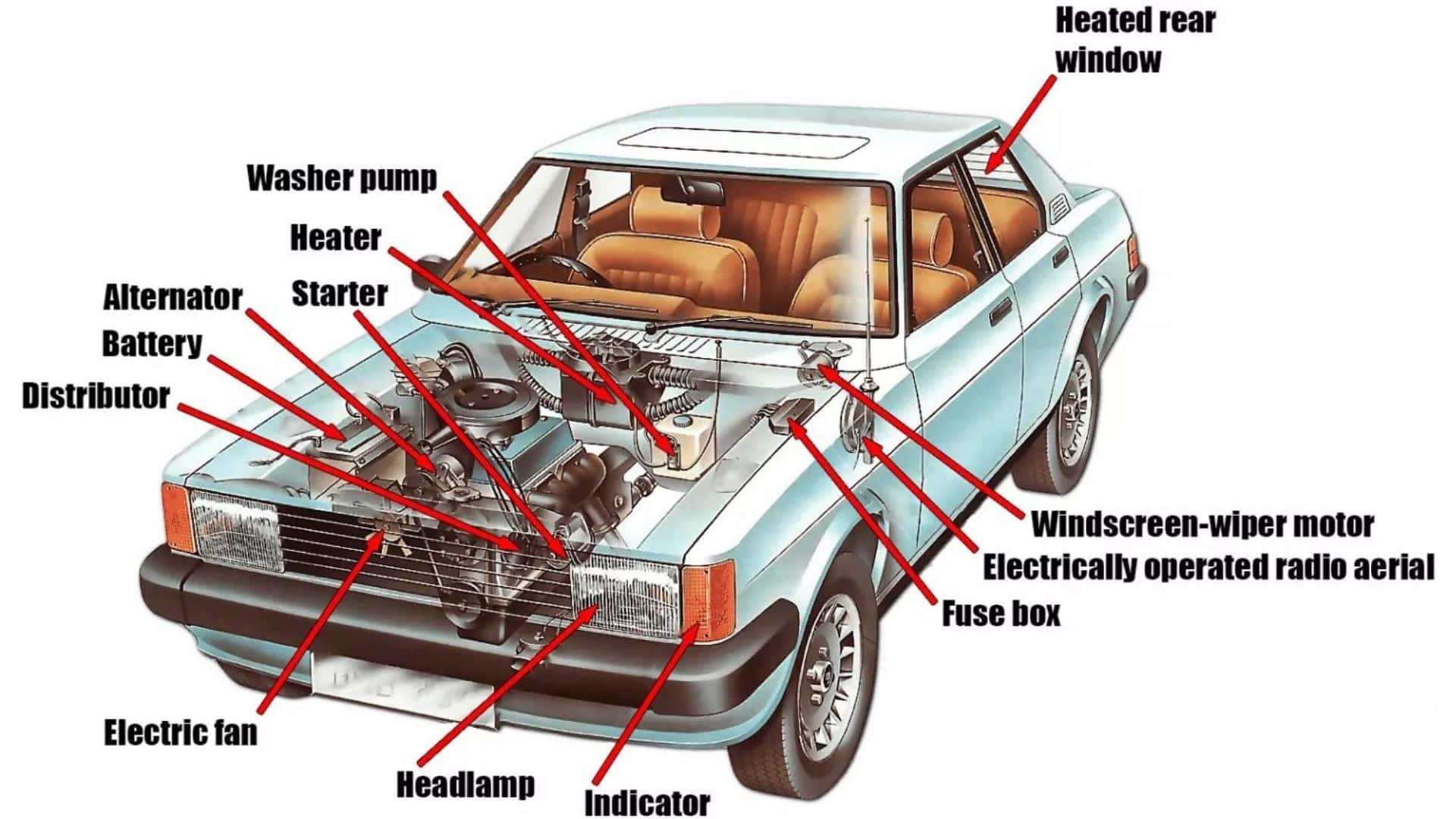
- Battery: The battery supplies the electrical startup energy needed to start the engine and powers accessories when the engine goes off.
- Alternator: After the engine is started, the alternator begins to produce electricity to charge the battery.
- Starter motor: The starting motor takes power from the battery to turn the engine and start the combustion process.
- Wiring and Fuses: Wiring transmissions the current through the car, while fuses and relays protect the wiring from overloaded or shorted current.
- Control Modules and Sensors: Current new vehicles rely on electronic control units (ECUs) and sensors to control engine performance, comfort features and safety systems.
Diagram
Learn more about Service StabiliTrak with this detailed guide.
How Does a Car Electrical System Works?
When the ignition key or ignition button is turned on, the battery provides the necessary power to the starting motor for the engine to turn on. Once the engine has turned on, the alternator begins providing power. The wiring delivers power, while fuses, relays, and control modules regulate it for the system’s correct operation.
Watch the video below to have an understanding of how the car essential system:
Sub-Systems Of A Car’s Electrical System
A vehicle electrical system is composed of many sub-electrical systems. Below are the popular sub-electrical systems, which are as follows:
- Ignition System.
- Starting System.
- Charging System.
- Engine Management System.
Ignition system
The function of the Ignition System is to ensure a continuous spark to the spark plug during the compression stroke of the gasoline engine cylinders. It function is to ignite the air/fuel mixture in a petrol engine cylinder.
The ignition system has numerous other components, such as ignition coils, spark plugs, battery, fuse, and relay. The ignition coil boosts battery voltage, creating a high-voltage pulse for igniting the air-fuel mixture in the engine cylinder.
Starting system
The starters of the system are electrical, which work on the principle of converting electrical energy into mechanical energy. In the past, car engines were started with hand cranks until 1912 when electric starters were introduced.
Learn more about Airbag Light with this detailed guide.
Charging system
The alternator is the primary system in a charging system. The charging system offers power to the electrical system in a car. The current is also delivered to your car’s electrical system and its various parts, like the starting system, ignition system, fuel system, lighting system, radio, air conditioner, and washer pump, among others.
Engine management system
Engine Management System is an essential component of the automotive electrical system. The system monitors engine operations through sensors and an electronic control unit, regulating fuel supply and ignition timing.
Common electrical system problems?
Problems in the electrical system may arise from weak batteries, faulty alternators, blown fuses, or a blister in the wiring or failing sensors. Symptoms may be dimming lights, no car start, dashboard warning lights, or malfunction of some accessory.
Learn more about Catalytic Converter with this detailed guide.
Conclusion
The modern automobile electrical system forms the backbone of any vehicle, connecting all the essential functions powered. In order to ensure that car users are aware of what is involved, it would be beneficial to educate them on the importance of this system. This will give car users knowledge on why this system is important
However, the secret to a sound electrical setup is through regular check-ups as well as repair when needed.
FAQs
How many electrical systems are in a car?
Modern cars have two electrical systems: one uses a 12V battery for basic functions like door locks and instrument panel, while the other uses a 48V circuit for high-powered electric motors that assist in driving.
Are car electrical systems AC or DC?
The current supplied by the electricity grid is always alternating current. In fact, batteries found in electric cars can hold direct current only. It is for this reason that most electronics come with a converter.
What are the principles of automotive electrical system?
The working principle in automobile electrical systems
The battery is charged by the alternator while the engine consumes the fuel. Without the engine running, the voltage of this alternator is less than the battery voltage. The battery supplies the loads; the alternator does not. The diodes in the alternators stop the current.
Is automotive wiring AC or DC?
The kind of power your car’s circuitry uses is DC, and this never changes.
What drains a car battery when it’s off?
Using the car battery, one can power devices like phones and the radio when the engine is off. Without the functioning of the alternator to charge the car battery, it may result in a rapid drain of the battery.The electronics continuously drain the car battery when they are utilized without powering on the engine.