
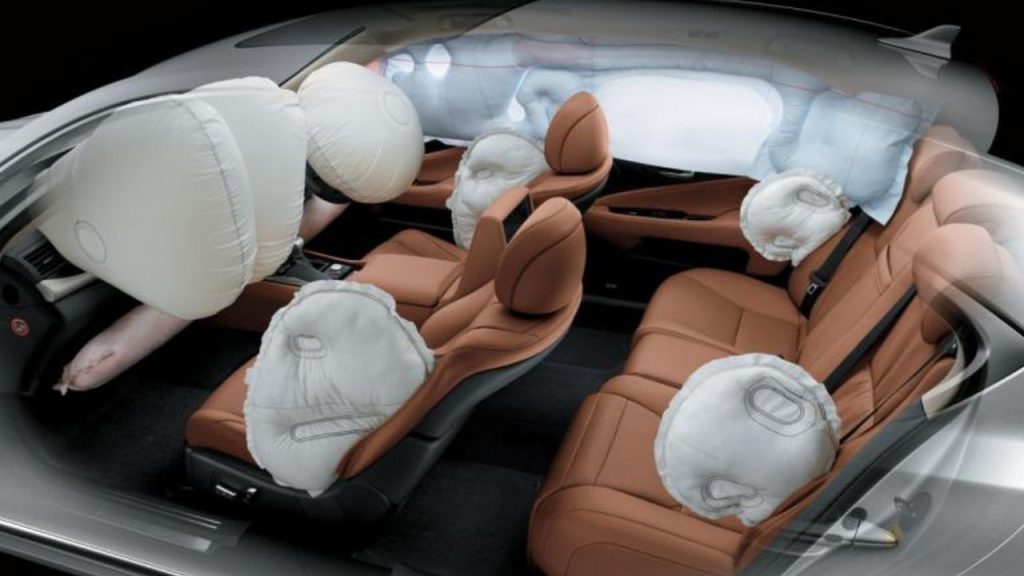
Did you know that car airbag systems have saved around 622,000 lives globally since they were introduced? Most drivers don’t even know they exist, and some do but don’t know how they work and function.
As a seasoned auto technician, I will simplify the learning to help you understand airbag systems, their functions, and how they work. I will also provide its diagram and video explanation for easy understanding. So, read to the end.
Let’s begin!
What is an Airbag System?
A car occupant-restraint device known as an airbag or supplementary inflatable restraint uses a bag that may inflate in milliseconds after a collision and then deflate.
It is composed of an impact sensor, an inflating module, a flexible fabric bag, and an airbag cushion. In the event of an accident, the airbag’s function is to give a car occupant gentle cushioning and restraint. It can lessen injury between the inside of the car and the flailing occupant.
The airbag provides an energy-absorbing surface between the car’s passengers and the steering wheel, instrument panel, body pillar, headliner, and windshield.
Up to 10 airbag modules in different configurations, such as driver, passenger, side-curtain, seat-mounted, door-mounted, side-impact, B- and C-pillar-mounted, knee bolster, inflatable seat belt, and pedestrian airbag modules, may be found in modern cars. You should learn how to reset the airbag system.
The airbag light serves as a watchful sentinel whose job it is to warn you of possible problems with your car’s airbag system.
If the SRS (Supplemental Restraint System) airbag light appears on your dashboard, it means that there may be a problem that needs to be reset or, in some cases, diagnosed by a professional to ensure safety.
What is the function of an airbag system in a car?
- Protects Occupants in a Collision – The system deploys instantly during a crash to cushion and reduce the force of impact on passengers.
- Prevents Direct Impact with Hard Surfaces – It stops the driver or passengers from hitting the steering wheel, dashboard, windshield, or side windows.
- Reduces Risk of Severe Head and Chest Injuries – Airbag distributes crash forces across the upper body, lowering the chances of skull fractures, brain trauma, or rib injuries.
- Works in Conjunction with Seatbelts – The sytem complements the seatbelt by preventing excessive forward movement, offering a double layer of protection.
- Minimizes Whiplash and Neck Injuries – It reduces sudden jerking of the head and neck in frontal or side impacts.
- Enhances Passenger Safety in Side Collisions – The side and curtain airbags protect against intrusions and glass shattering during side-impact crashes.
- Protects Lower Body Parts – Knee airbags reduce injuries to the legs and knees by preventing them from striking the dashboard.
- Improves Survival Rates in Severe Crashes – Significantly lowers the likelihood of fatal injuries in high-speed or severe collisions.
- Provides Adaptive Protection – Modern airbags adjust deployment force based on passenger size, seating position, and crash severity.
- Boosts Overall Vehicle Safety Rating – Airbag systems contribute to higher crash-test safety scores, making vehicles safer and more marketable.
Accident Scenario
Let’s me give you two good examples of where and how an airbag system saved someone from a serious accident:
A driver is traveling at 60 km/h and suddenly crashes into a stationary vehicle. The frontal airbag deploys within 30–50 milliseconds, cushioning the driver’s impact, reducing chest compression, and preventing direct head contact with the steering wheel. This can mean the difference between severe injury and walking away with only minor bruises.
Without an airbag, the driver’s head and chest slam into the steering wheel and dashboard, likely causing skull fractures, brain injury, or broken ribs.
Another scenario where the car airbag system is active:
A car is struck from the side at an intersection. Without an airbag, the passenger’s head and upper body are thrown violently into the window or metal frame, risking severe head trauma, broken bones, or lacerations from shattered glass.
However, the side and curtain airbags instantly inflate between the passenger and the door, acting as a protective cushion. The head and torso are shielded from both the car’s structure and flying glass, significantly lowering the chance of fatal injuries.
Airbag Parts
- Airbags: Rapidly inflating and deflating airbags in the steering wheel, dashboard, and seats during collisions.
- Inflators: Explosive devices that ignite a chemical reaction to inflate the airbag with gas.
- Sensors: Detect impact and send signals to the SRS module.
- SRS module: Processes sensor signals and determines if airbags should be deployed.
- Control unit: Controls the deployment of airbags and other safety features.
- Clock spring: Maintains electrical connections while allowing steering wheel rotation.
- SRS (Supplemental Restraint System): links the airbag system to the seatbelt system, and sensors detect impacts.
- SRS module: Controls airbag deployment; the control unit commands deployment upon significant impact signals.
- Clock spring: Connects airbag control module to vehicle’s electrical system for continuity.
Diagram

How Does an Airbag Work?
Airbags in cars work through a chemical reaction and sensors, consisting of crash sensors, an inflator, an airbag module, and an airbag control unit. The main control unit receives information from various sensors, such as wheel speed, seat occupant status, and brake pressure sensors, to activate safety features like automatic door lock and seatbelt lock.
When the main control unit detects an accident, it sends a signal to the inflator, initiating a chemical charge that produces an explosion of Nitrogen gas, filling the airbag. This nitrogen gas bursts through the panel, providing a cushioning effect to the passenger. The airbag deflates automatically after deployment.
The airbag deployment process is rapid, with the airbags deployed in around 55 milliseconds, making it highly effective due to its quick reaction time. Vehicles use different types of impact sensors, such as mass and rolling-type sensors, to detect force from a collision.
When thresholds are met, the airbag control unit triggers an ignition, activating a propellant to inflate the airbags rapidly to provide protection.
Front airbags inflate in moderate-to-severe frontal crashes to protect occupants from hard structures, while side airbags and side curtain airbags deploy in side and rollover crashes to prevent injury from the vehicle’s structure or external objects.
This intricate process occurs within milliseconds, with the sole aim of cushioning occupants from the force of the crash. It is critical to make sure the airbag system is functional and the airbag light is off during the deployment process. Here is how airbag works in a car video:
Conclusion
The airbag system is one of the most important safety innovations in modern vehicles. By working alongside seatbelts, it cushions the impact during collisions, prevents direct contact with hard surfaces, and significantly reduces the risk of fatal injuries. From frontal airbags to side and curtain airbags, the technology has evolved to protect passengers in nearly all crash scenarios.
While airbags don’t prevent accidents, they play a vital role in minimizing injuries and saving lives. Understanding how they work and their functions helps drivers appreciate the importance of keeping the system in good working condition.
If you found this guide helpful, make sure to like, share, and subscribe for more car safety and maintenance insights.
Frequently Asked Questions (FAQs)
1. What is the main purpose of an airbag system?
The primary purpose of airbags is to reduce the severity of injuries during a collision by cushioning the occupants and preventing direct impact with hard surfaces.
2. Do airbags work without seatbelts?
Airbags are designed to work with seatbelts, not replace them. Without a seatbelt, the airbag may not protect you effectively and could even cause injury.
3. How fast do airbags deploy?
Airbags typically deploy within 30 to 50 milliseconds after a collision is detected.
4. What activates the airbag system?
Sensors detect sudden deceleration or impact, sending a signal to the airbag control unit, which ignites the inflator and deploys the airbag.
5. Can airbags deploy without an accident?
It’s rare, but electrical faults, defective sensors, or malfunctioning modules can cause accidental deployment.
6. How many types of airbags are there in cars?
Common types include frontal airbags, side airbags, curtain airbags, knee airbags, and seatbelt airbags.
7. Do airbags need maintenance?
Yes. While airbags don’t require routine service, the airbag warning light should never be ignored. If it’s on, the system may not function in a crash.
8. How many lives have airbags saved?
Since 1987, frontal airbags alone have saved over 50,000 lives in the U.S. and hundreds of thousands globally.
9. Can I drive with the airbag warning light on?
It’s unsafe. The light indicates a malfunction, meaning the airbags may fail to deploy during a collision.
10. Are airbags dangerous?
When functioning properly, airbags are very safe. However, deploying with extreme force, they can cause minor injuries like bruises or burns, but these are far less severe than injuries from not having airbags.